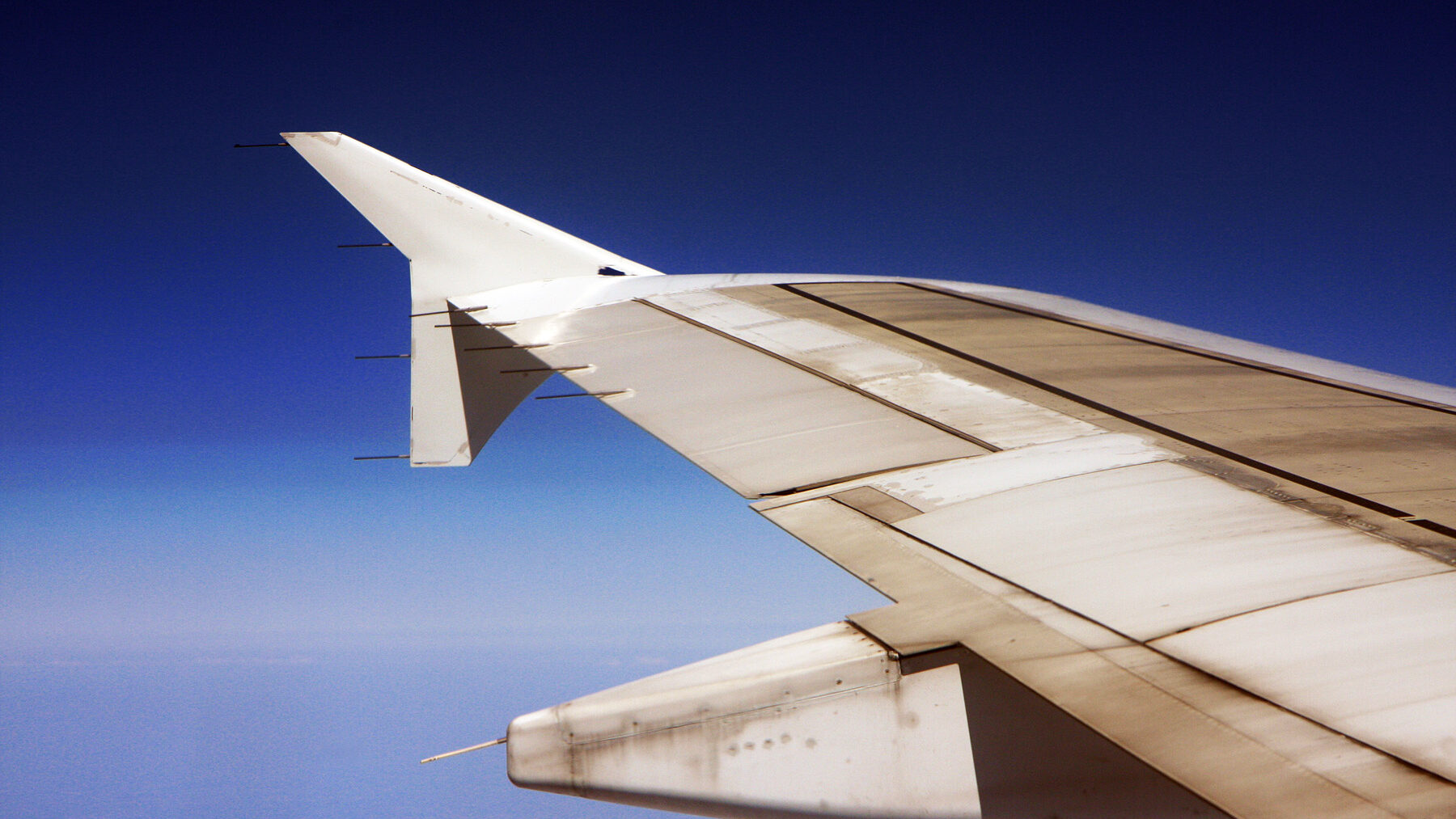
What do you think is the safest form of travel today?
I’m sure for many readers, air travel is not the immediate first answer, but with a death risk of 1 in 13.7 million, it is remarkably safe (Barnett and Jan, 2024). Though most sources agree that aviation is the safest form of travel, many travelers report feeling most afraid of air travel compared to other means of transportation (Carlsson et al., 2004). This effect is compounded by the fact that, though rare, aviation incidents tend to dominate media outlets when they do occur, and some of these incidents result in significant losses of life reinforcing the fear of air travel in many people (Wang and Cole, 2013). For our research, we explore the effects of these incidents on air travel. How do they impact the volume of air traffic? Is the fear of flying more misconstrued than it should be? What role does the media play in constructing popular sentiments on air travel? To help answer these questions, we analyzed the Air Traffic Passenger dataset from San Francisco Open Data, which documents all flights arriving at or departing from San Francisco International Airport. By aggregating the passenger count statistics, we can get a sense of flight patterns in the U.S. as a whole, considering San Francisco’s airport is one of the busiest in the nation and these flights come and go to most of the world.
Research Questions

How does the frequency of fatal accidents affect a passenger’s likelihood of flying with a particular airline?

How has the perception of airline safety evolved over the years, and what factors have contributed to these changes?

How does the tone of media coverage of an airline accident/incident correlate with changes in passenger volume?
Overview
Our Mission
Many studies have examined the relationship between airline safety, media coverage, and passenger behavior. Research indicates that even though air travel is statistically safer than other forms of transportation, many people still perceive it as dangerous. Barnett and Torra (2024) found that the “worldwide death risk per boarding was 1 in 13.7 million” from 2018 to 2022, meaning that a passenger could fly daily for 220,000 years before being in a fatal crash. Despite these statistics, many people are still afraid of flying, and it remains widespread due to factors beyond statistical risk. Psychological research suggests that a passenger’s satisfaction with airport experiences, such as check-ins and security procedures, can impact emotions toward air travel, including fear (Martinussen et al., 2011). Media coverage plays a significant role in shaping public perception of airline safety. Van der Meer et al. (2022) argue that media focuses more on rare but dramatic plane accidents, making people think flying is riskier than it is. Additionally, Wang and Cole (2013) conducted an experimental study showing that exposure to news reports about plane crashes increases anxiety about flying.
Meanwhile, Fleischer et al. (2012) found that passengers who are more afraid of flying tend to choose airlines perceived as safer, prioritizing safety over cost and convenience. This idea is expanded by another study demonstrating that the way safety information is presented, whether as star ratings or incident rates, can influence how people choose which airline to fly with (Koo et al., 2019). While much research has explored how fear influences passenger behavior, fewer studies have examined how long this fear lasts after an accident. Yang et al. (2018) investigated whether passengers avoid certain airlines after accidents, finding that factors like media coverage and consumer trust influence this avoidance behavior. However, it remains unclear whether airlines that receive more negative media attention experience more extended declines in passenger volume compared to those portrayed more neutrally or factually. Our research aims to fill this gap by examining whether airlines with more fear-driven media coverage suffer a more significant drop in passenger numbers.
Impact
This study is critical because it has the potential to significantly impact public perception of airline safety and alleviate a lot of people’s innate fear of flying. It is a natural human instinct to be afraid of riding in a machine far off the ground, and incidents that have led to fatalities from flying certainly do not ease those worries. Over more than a century since flying was invented, there have been many moments in history where flying was seen as dangerous. Whenever there is a crash, the media is quick to write reports and stories of the tragedies and, more often than not, blows the story way out of proportion to the point that it traumatizes people from wanting to fly. The reality is that flying is a safer mode of transportation than driving a car. Still, the narratives that the media portrays, especially by using emotionally charged language, actively shape public perception of the airline industry and influence passenger decisions. Analyzing a dataset on inbound and outbound flights in the United States and analyzing the impacts of negative media coverage, the fear of flying may not be all too necessary. We hope that by contextualizing media narratives and providing exposure to the underlying psychological impacts of a small piece of the aviation industry, we can articulate a more rational perspective of flying. From our studies, we want to help alleviate some of these fears by providing statistical data that proves that fatal accidents are an extreme minority in all of air travel and that air travel shouldn’t be something to be scared of in the first place.
Timeline of Aviation Regulation and Accidents
5K
Airlines
11K
Incidents
68
Regulations
5M
Headlines